
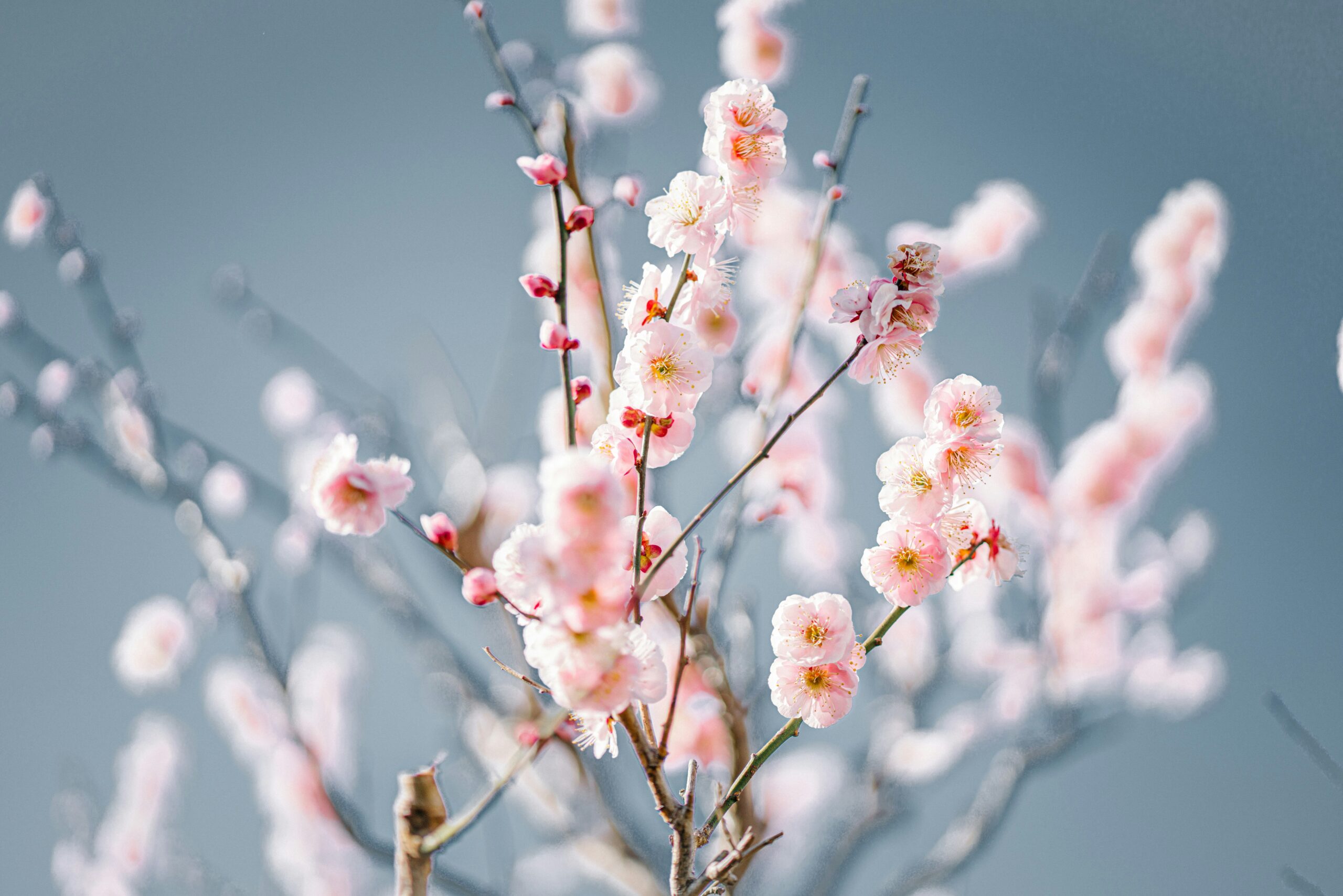
Hello everyone! Can you believe February is already coming to an end? How time flies! How have you all been?
Here in Tokyo, February has felt like a true transition of the seasons. We’ve experienced the full spectrum: from quiet, snowy mornings to surprisingly warm afternoons that have coaxed the plum blossoms into bloom. We are watching the landscape shift from the pale, muted tones of winter to the vibrant colours of early spring.
The Meaning of Kisaragi (如月)
In the traditional Japanese calendar, February is known as Kisaragi. This beautiful name symbolises the moment vegetation begins to stir beneath the lingering winter chill.
There are two popular theories behind the name that you might find interesting:
- Kinu-saragi (衣更着): Literally “wearing more clothes.” It refers to the need to layer up against the stubborn cold.
- Kusa-ki-hari-zuki (草木張月): The “month when plants bud,” marking the very first signs of life in the fields.
These terms appear frequently in Heian-era poetry and classical tales, reminding us that Japanese people have been observing these subtle seasonal shifts for over a thousand years.
Plum vs. Cherry: Can You Tell the Difference?
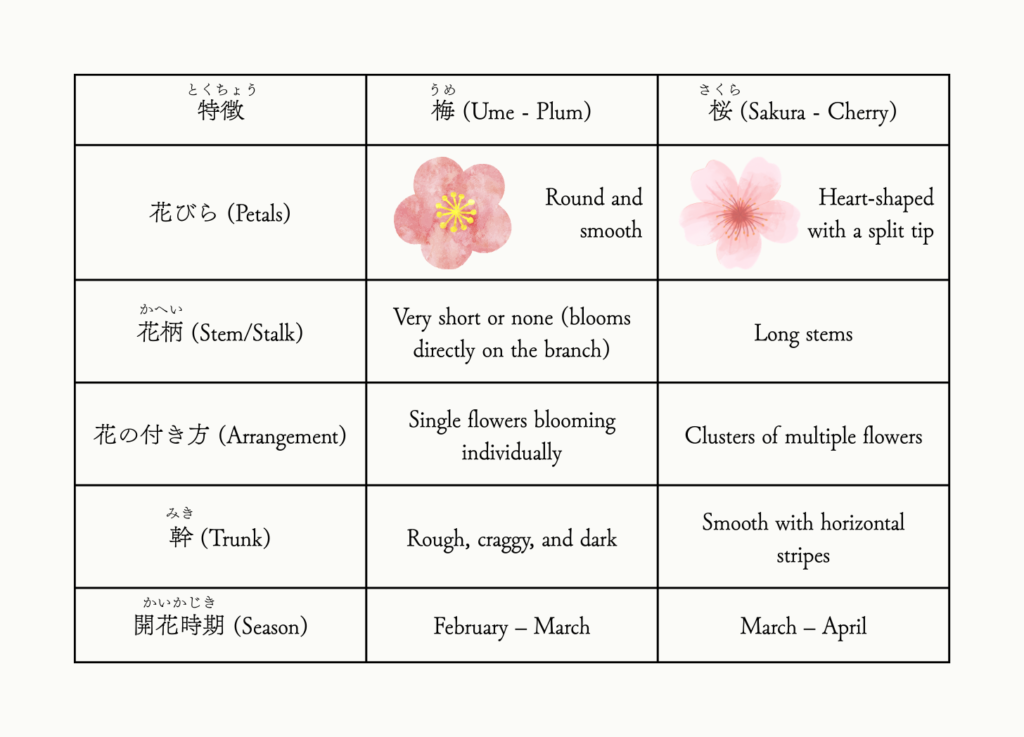
As I mentioned, the plum blossoms (Ume) are already out! While they are often mistaken for cherry blossoms (Sakura), they have a distinct character.
Ume are resilient; they bloom in the heart of winter, peaking between February and March, whereas Sakura wait for the true warmth of spring.
If you take a closer look during your next walk, you’ll notice the differences! Here is some essential vocabulary to help you distinguish them like a pro:
💡 Cultural Note for Learners
In Japan, the plum blossom is a symbol of patience and faithfulness because it “endures the snow” to bring the first scent of spring. While Hanami (flower viewing, in modern Japanese usage it almost always refers to viewing cherry blossoms) is famous for Sakura, many locals enjoy Umemi (plum viewing) because the scent of Ume is much stronger and sweeter!
Next time you see a blooming tree, check the trunk and the petals—are you looking at a hardy Ume or a delicate Sakura?
Photo by Tokyo Kohaku on Unsplash

コメント